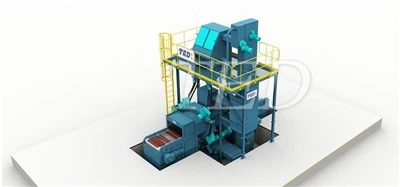
Blast Wheel Manufacturer
As the core component of a wheel blasting machine, the blast wheel determines how effectively abrasive is accelerated, distributed, and directed onto the workpiece. TED provides curve-blade turbines, direct-blade turbines, G type turbines, and complete shot blasting turbine solutions for new equipment, production upgrades, and replacement projects.
-
![Curve-blade Turbine]() Curve-blade TurbineThe Curve Blade Turbine is a core blasting component designed to accelerate and distribute metallic abrasive media in airless shot blasting machines. Its curved blade configuration is engineered to provide a controlled abrasive stream...view more
-
![Direct-blade Turbine]() Direct-blade TurbineDirect-blade Turbine is the core blasting component of shot blasting equipment. It accelerates steel shot and grit through high-speed rotation and directional blasting for rust removal, oxide scale removal, sand removal, and surface...view more
-
![Ted G Type Turbine]() Ted G Type TurbineThe Ted G Type Turbine is the core projection component of a shot blasting machine. It accelerates and projects steel shot and grit through a high-speed rotating impeller, and is used for sand removal from castings, rust removal from...view more
-
![Shot Blasting Turbines]() Shot Blasting TurbinesThe Shot Blasting Turbine is the core projectile component of a shot blasting machine. It uses a high-speed rotating impeller to accelerate and project abrasive materials such as steel shot and steel grit onto the workpiece surface,...view more


Why Choose TED Blast Wheels
Controlled Abrasive Distribution:
The impeller, control cage, blades, and wheel geometry are engineered as a coordinated system to direct abrasive toward the required blast zone and maintain a stable cleaning pattern.
High Abrasive Throughput:
Available configurations support different abrasive flow requirements, from standard cleaning operations to high-output blasting of large castings, forgings, plates, profiles, and structural components.
Durable Wear Components:
Critical components are manufactured from hardened tool steel and other high-wear materials selected for continuous operation in abrasive shot blasting environments.
Lower Maintenance Requirements:
Accessible wear parts and service-oriented component design simplify routine inspection and replacement, helping reduce maintenance time and unplanned production interruptions.
What Determines Blast Wheel Performance?
Selecting a blast wheel is not simply a matter of choosing a higher motor power. Effective shot blasting depends on matching the turbine to the complete production process.
Abrasive Flow:
Abrasive flow determines how much blasting media reaches the workpiece within a given period. Higher flow can increase cleaning capacity, but it must be matched with motor power, wheel geometry, separator capacity, and abrasive recovery systems.
01
Blast Pattern:
The blast pattern determines where the abrasive energy is concentrated on the workpiece. Correct control cage positioning and wheel orientation help focus abrasive on the required cleaning area rather than wasting media on chamber liners.
02
Wheel Speed:
Rotating speed influences abrasive discharge velocity and impact energy. The correct speed depends on the required surface condition, abrasive characteristics, workpiece material, and cleaning process.
03
Blade Geometry:
Curve-blade and direct-blade designs provide different abrasive acceleration and discharge characteristics. Selection should therefore be based on workpiece geometry, required blast distance, cleaning intensity, and production objectives.
04
Abrasive Type:
Steel shot, steel grit, and other metallic blasting media behave differently inside the turbine. Abrasive size, hardness, shape, and operating mix should be considered when selecting wheel components and process parameters.
05

TED blast wheels and shot blasting turbines can be integrated into different wheel blasting systems for surface cleaning, preparation, and finishing.
Foundry & Casting:Remove sand, scale, and surface contamination from gray iron, ductile iron, steel, and other cast components before inspection, machining, coating, or further processing.
Forging:Clean oxide scale from forged components while preparing a uniform surface for subsequent manufacturing operations.
Steel Structure:Prepare beams, profiles, welded structures, and fabricated steel components by removing rust, scale, and surface contamination before painting or coating.
Steel Plate & Profile:Support continuous surface preparation of plates, sections, channels, pipes, and profiles in roller conveyor shot blasting lines.
Automotive & Machinery Components:Clean housings, frames, axles, gears, brackets, and other metal components requiring repeatable surface preparation.
Equipment Modernization:Existing shot blasting machines can be evaluated for turbine replacement or performance upgrades where cleaning capacity, maintenance requirements, or abrasive distribution need improvement.
Quality Control
Reliable turbine operation requires precise manufacturing because high-speed rotating components must operate continuously under abrasive working conditions.TED applies inspection and process controls throughout manufacturing.
Material Inspection:Raw materials and critical turbine components are checked before production to confirm that they meet manufacturing requirements.
Precision Machining:Impellers, blades, shafts, housings, and related components are manufactured according to controlled dimensions to support correct assembly and stable operation.
Dynamic Balance Verification:Rotating assemblies are checked to minimize imbalance that may cause vibration, bearing load, or premature component wear.
Assembly Inspection:Blade installation, control cage positioning, shaft alignment, fasteners, and interfaces are inspected during assembly.
Trial Operation:Completed units undergo operating checks before shipment to verify rotation, vibration, mechanical operation, and assembly condition.
Final Inspection:Dimensions, configuration, documentation, and packaging are checked before release for shipment.
Blast wheel performance gradually changes as blades, impellers, control cages, liners, and other components wear during operation.
TED can supply replacement components for routine turbine maintenance, including:
• Blades
• Impellers
• Control cages
• Liners
• Housings
• Shafts
• Bearings
• Related wheel components
Regular inspection of wear parts helps maintain the designed blast pattern and prevents worn components from affecting cleaning efficiency or damaging adjacent components.

Manufacturing Experience
Founded in 2007 in Qingdao, China, TED specializes in the development and manufacturing of shot blasting machines, blast wheels, sand blasting equipment, dust collection systems, and related foundry equipment.
TED operates under an ISO 9001 quality management system and provides CE-related product compliance support according to applicable equipment and project requirements.
Our equipment and solutions serve customers in international markets including the United States, Canada, Russia, Saudi Arabia, Turkey, Uzbekistan, and other regions.

Blast wheels and turbine components are protected according to their size, weight, and transportation requirements.
Packaging can include:
• Plywood cases
• Wooden cases
• Steel-frame support
• Moisture protection
• Anti-corrosion wrapping
• Internal fixing and cushioning
• Export container loading
We support sea freight, railway transportation, multimodal logistics, and air freight for spare parts according to customer delivery schedules and project requirements.
Certifications
TED operates under internationally recognized management systems to ensure product quality and manufacturing consistency.
• ISO 9001 Quality Management System
• ISO 14001 Environmental Management System
• ISO 45001 Occupational Health and Safety Management System
• CE Certification
FAQ
We are one of the most experienced blast wheel manufacturers and suppliers in China. With a professional production team, we offer a wide range of products with superior quality. Please rest assured to wholesale durable blast wheel for sale here from our factory.